Rehabilitating Spalled Bridge Concrete with Structural Patching & Carbon Fiber
→ Services → Field Services → Field Service Case Study
Rehabilitating Spalled Bridge Concrete with Structural Patching & Carbon Fiber
→ Services → Field Services → Field Service Case Study
Market
DOT
Challenge
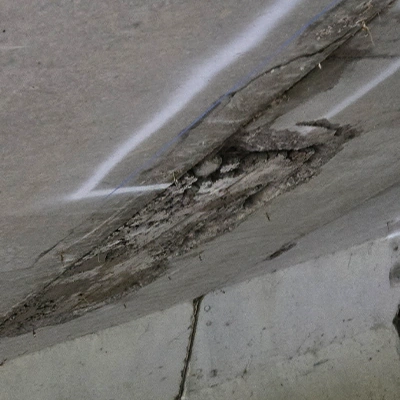
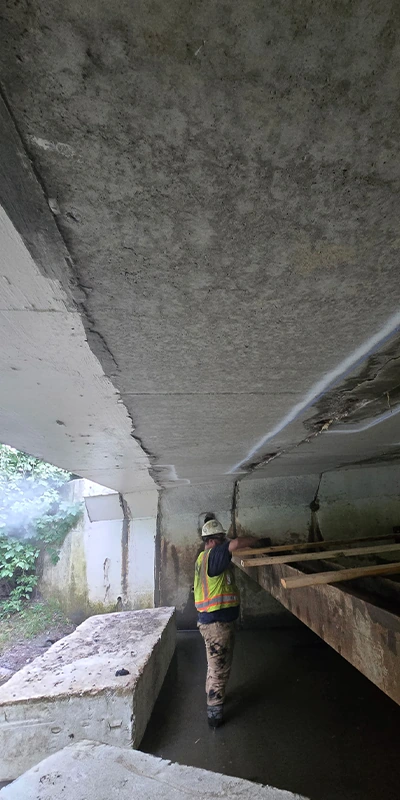
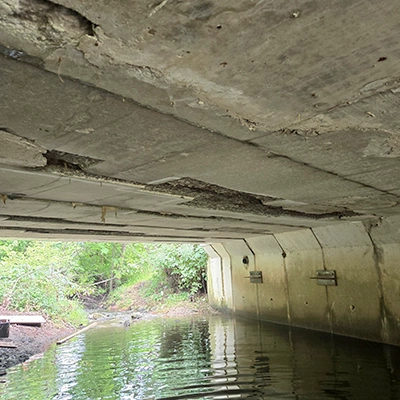
As part of an Ohio Department of Transportation bridge rehabilitation project in Clinton County, Ohio, deteriorated concrete was identified across several areas on the underside and sides of the bridge.
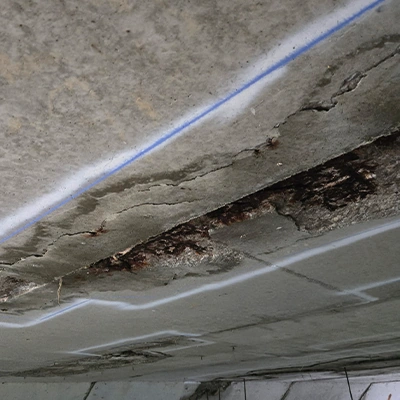
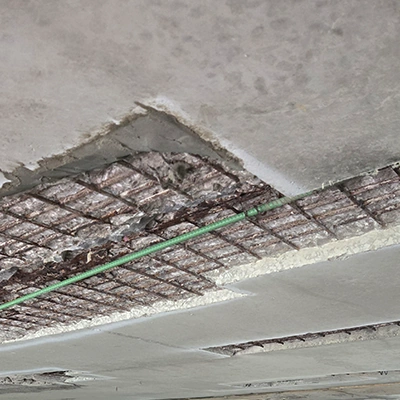
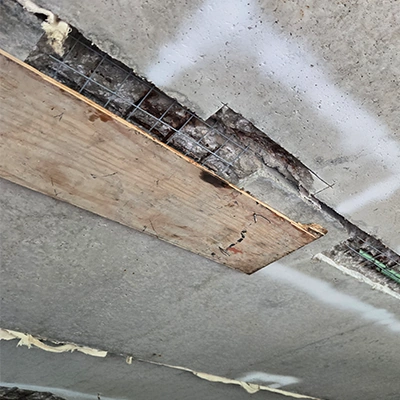
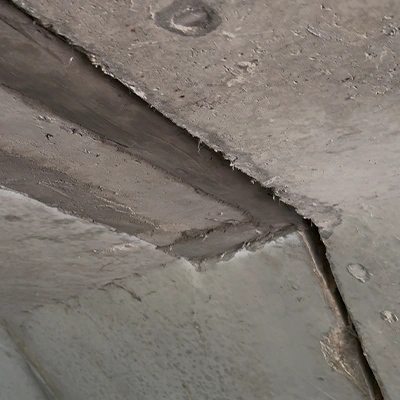
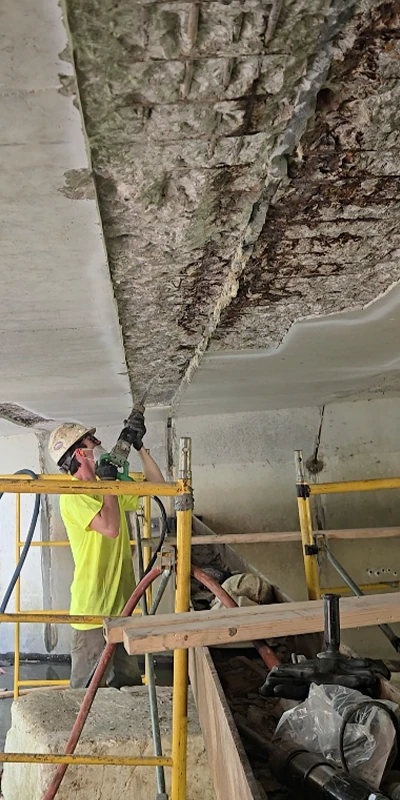
Years of service had contributed to concrete spalling, material loss, and corrosion around exposed reinforcing steel. ODOT’s immediate concern was the deteriorating concrete, but continued loss of material could eventually affect the structural integrity and service life of the bridge if left unaddressed.
The extent of deterioration also proved greater than originally anticipated. The initial scope estimated only 38 square feet of concrete patching and 173 square feet of fiber reinforced polymer installation, along with 11 square yards of epoxy urethane coating. Once deteriorated material was removed and the full repair areas were exposed, the actual work expanded considerably.
Repair Strategy
Rather than replacing otherwise serviceable bridge components, the Field Services team used a multi-stage rehabilitation approach designed to remove unsound material, rebuild the damaged concrete, reinforce selected repairs, and protect exposed surfaces from continued weathering.
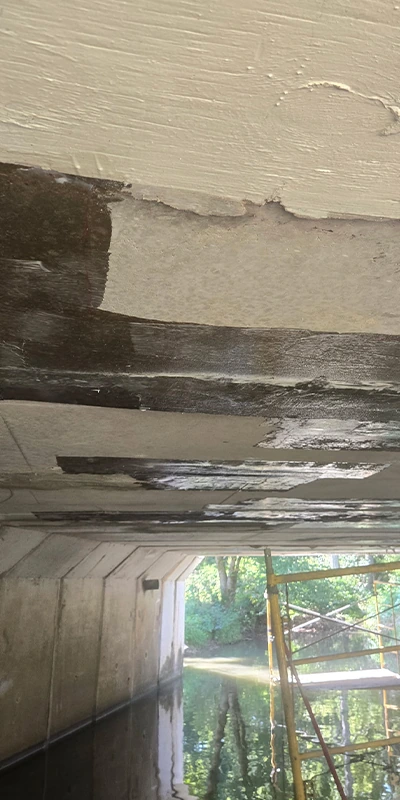
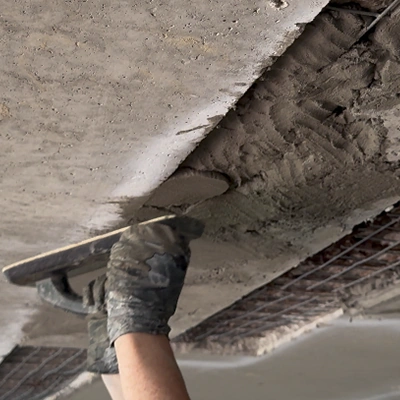
Spalled and deteriorated concrete was first removed from the affected areas until sound material remained. Where reinforcing steel had become exposed, the concrete was cleared from around the rebar. A vertical and overhead concrete repair material was then used to reconstruct the lost sections and restore the profile of the bridge.
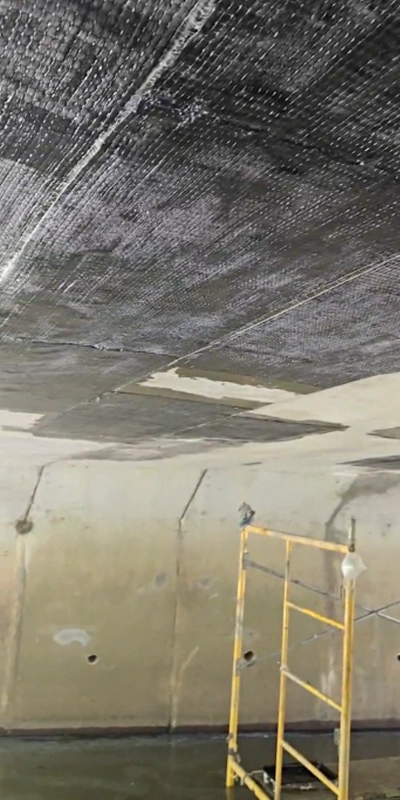
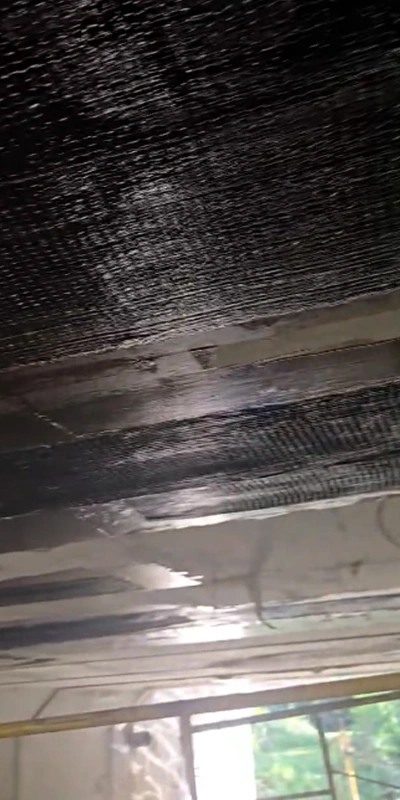
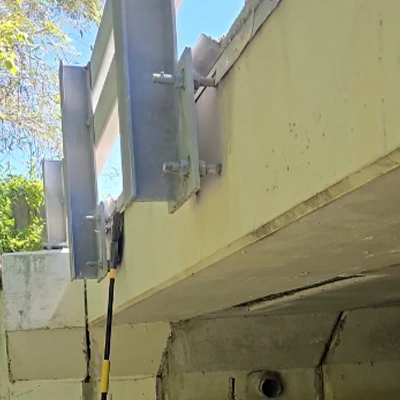
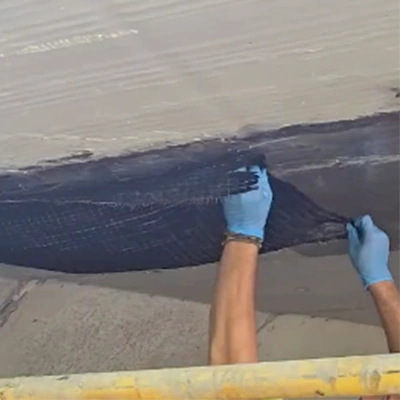
Selected repaired areas were further reinforced with one layer of carbon fiber composite, helping hold the patchwork firmly in place and provide additional support to the rehabilitated concrete. An epoxy urethane coating was also applied to portions of the bridge sides and underside to create a weather-resistant protective surface.
Scope
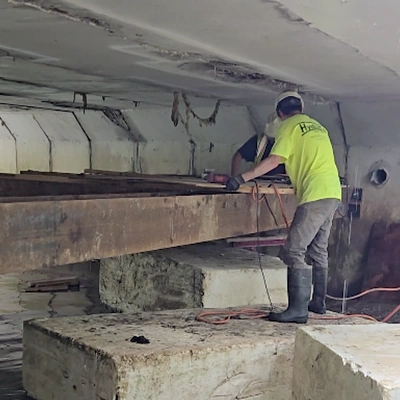
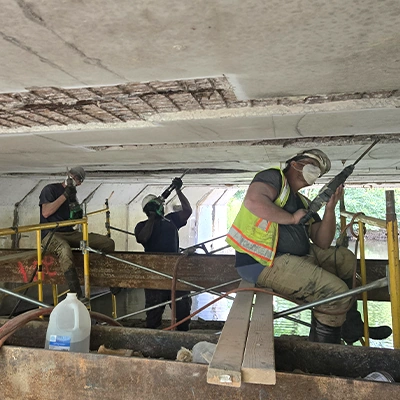
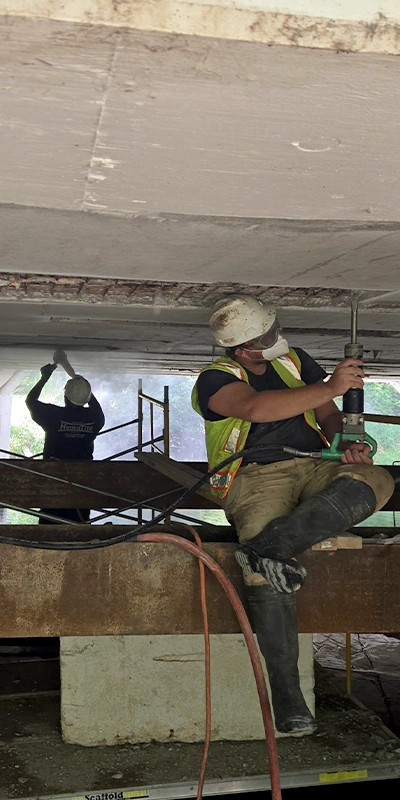
The crew began by establishing access beneath the bridge using scaffolding and other temporary work platforms positioned around the active waterway. The project did not require dewatering or diversion of the water below, and HydraTech’s work was completed entirely from beneath and alongside the structure without requiring lane closures or disrupting traffic above.
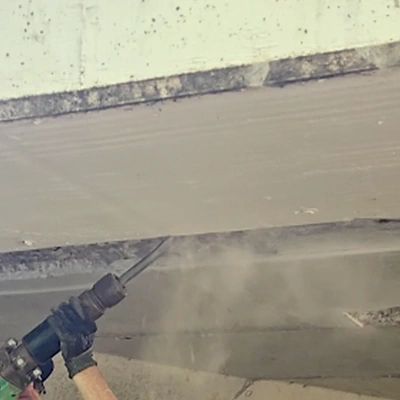
Technicians marked the affected areas and progressively chipped away deteriorated and spalling concrete. This removal phase continued through a few workdays before the crew transitioned into forming and patching operations. As the work progressed, approximately 100 square feet of deteriorated concrete ultimately required rehabilitation, substantially more than the original estimate.
Once unsound concrete had been removed and exposed reinforcing steel cleaned, the crew rebuilt the affected areas using the specified vertical and overhead repair material. Forming and patching continued across the various repair locations until the deteriorated portions had been reconstructed.
After the concrete repairs were completed, selected surfaces were ground and prepared for the fiber reinforced polymer application. The crew then installed one layer of carbon fiber across approximately 235 square feet, providing reinforcement over the designated patch areas.
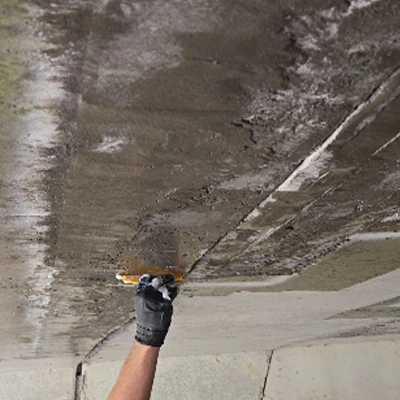
Finally, epoxy urethane coating were applied to designated areas along the bridge sides and portions of the underside to provide additional resistance against weather exposure. The project was completed over approximately 20 on-site working days, with the Field Services crew typically consisting of three technicians and a supervisor.

Solution
The completed rehabilitation removed extensive deteriorated and spalling concrete, reconstructed approximately 100 square feet of damaged bridge surface, reinforced selected areas with approximately 235 square feet of carbon fiber composite, and protected additional concrete surfaces with an epoxy urethane weather-resistant coating.
By combining concrete removal, vertical and overhead structural patching, carbon fiber reinforcement, and protective coating, the Field Services team addressed several stages of bridge deterioration within a single coordinated project. The work restored lost concrete, reinforced the repaired areas, and helped protect the structure against continued environmental exposure.
Just as importantly for a transportation application, all of HydraTech’s work was performed from around and beneath the bridge without lane closures or disruption to the traveling public. The project demonstrates the Field Services team’s ability to adapt when field conditions reveal more deterioration than originally anticipated and carry a bridge repair from demolition and concrete reconstruction through composite reinforcement and final protective treatment.